
Use of Uranium for Electricity Generation | Vision Academy
Use of Uranium for Electricity Generation | Vision Academy
Introduction
Electricity is the backbone of modern civilization, and among the various energy sources available today, nuclear power stands out as one of the most efficient and reliable. One of the key elements used in nuclear power generation is Uranium. This blog explores how uranium is used to generate electricity and why it plays a crucial role in meeting global energy demands.
What is Uranium?
Uranium is a naturally occurring radioactive metal found in small amounts in rocks, soil, and water. It is known for its ability to undergo nuclear fission—a process where the nucleus of an atom splits into smaller parts, releasing an enormous amount of energy.
The Process of Electricity Generation Using Uranium
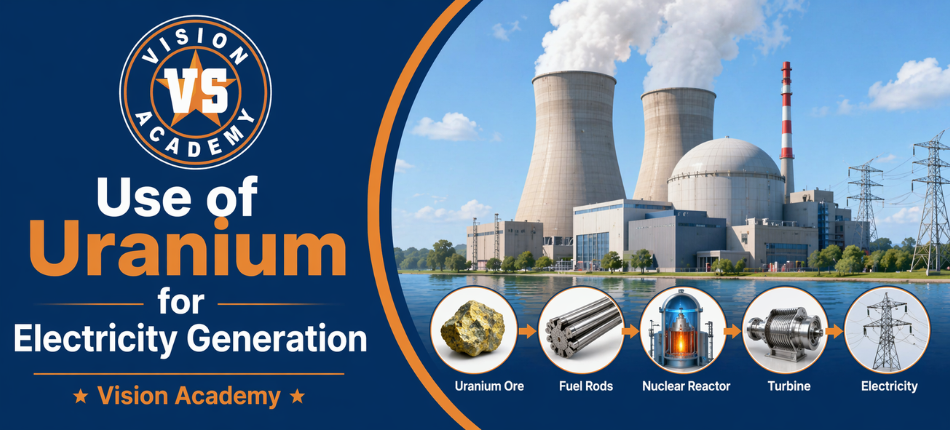
Electricity generation using uranium involves several key steps:
1. Nuclear Fission
Nuclear fission is the fundamental process behind nuclear power generation. In a nuclear reactor, atoms of uranium (usually Uranium-235) are bombarded with neutrons. When a uranium nucleus absorbs a neutron, it becomes unstable and splits into two smaller nuclei, releasing a tremendous amount of heat energy along with additional neutrons. These newly released neutrons go on to split other uranium atoms, creating a continuous chain reaction. This reaction is carefully controlled using control rods and moderators to ensure a steady and safe release of energy rather than an explosion.
2. Heat Production
The energy released during nuclear fission appears mainly in the form of heat. This heat is absorbed by a coolant, typically water, circulating through the reactor core. As the coolant absorbs heat, its temperature rises significantly. In many nuclear reactors, this heated water is either directly converted into steam or used to heat a separate water system to produce steam. This step is crucial because it transforms nuclear energy into thermal energy, which can then be used for mechanical work.
3. Steam Turbine Operation
Once high-pressure steam is generated, it is directed toward a turbine. The force of the steam causes the blades of the turbine to spin rapidly. This spinning converts the thermal energy of the steam into mechanical energy. The turbine is designed to maximize efficiency, ensuring that as much energy as possible is extracted from the steam. After passing through the turbine, the steam is cooled and condensed back into water, which is then recycled in the system.
4. Electricity Generation
The rotating turbine is connected to a generator. As the turbine spins, it drives the generator, which converts mechanical energy into electrical energy through electromagnetic induction. Inside the generator, a rotor spins within a magnetic field, producing electricity. This electricity is then transmitted through power lines to homes, industries, and businesses. This final step completes the transformation of nuclear energy into usable electrical power.
Advantages of Using Uranium for Electricity
One of the biggest advantages of using Uranium for electricity generation is its extremely high energy density. A very small amount of uranium can produce a massive amount of energy compared to traditional fossil fuels like coal or oil. Additionally, nuclear power plants emit very low levels of greenhouse gases during operation, making them an environmentally cleaner option for large-scale electricity production. Uranium-based energy also provides a reliable and continuous power supply, unlike renewable sources such as solar or wind, which depend on weather conditions. This makes nuclear energy an important contributor to energy security and stability.
Challenges and Risks
Despite its advantages, the use of uranium in electricity generation comes with several challenges and risks. One of the major concerns is the management and disposal of radioactive waste, which remains hazardous for thousands of years and requires secure storage solutions. There are also safety risks associated with nuclear reactors, as accidents—though rare—can have serious environmental and health consequences. High construction and maintenance costs of nuclear power plants make them less accessible for some countries. Additionally, the mining and processing of uranium can have environmental impacts if not managed responsibly.
Future of Uranium in Energy
The future of uranium in energy looks promising, especially as the world shifts toward low-carbon energy sources. Advances in nuclear technology, such as small modular reactors (SMRs) and next-generation reactors, are making nuclear power safer, more efficient, and more flexible. Research is also being conducted on recycling nuclear fuel and reducing radioactive waste. Countries like India are investing in nuclear energy to meet growing electricity demands while reducing carbon emissions. As global energy needs rise, uranium is expected to remain a key component of the clean energy mix.
Conclusion
Uranium plays a crucial role in modern electricity generation by providing a powerful, efficient, and relatively clean source of energy. While there are challenges related to safety, cost, and waste management, ongoing technological advancements are addressing many of these issues. With increasing demand for sustainable and reliable energy, nuclear power based on uranium is likely to continue being an important part of the global energy landscape. It offers a practical solution for balancing energy needs with environmental responsibility.
Use of Uranium for Electricity Generation Use of Uranium for Electricity Generation Use of Uranium for Electricity Generation Use of Uranium for Electricity Generation Use of Uranium for Electricity Generation Use of Uranium for Electricity Generation Use of Uranium for Electricity Generation
 Previous Post
 Next Post