How to Prepare During Exam Gaps – Smart Study Strategy by Vision Academy
Introduction
Exams are stressful, but the gap days between exams are a golden opportunity for smart preparation. Many students either waste this time or feel confused about what to study. At Vision Academy, we believe that proper planning during exam gaps can improve performance, boost confidence, and reduce stress significantly.
Learn how to prepare during exam gaps effectively with smart revision strategies, time management tips, and stress-free study planning to boost confidence and score higher in exams.
Understanding the Importance of Exam Gaps
Exam gaps act as powerful revision boosters because they give students dedicated time to review and refine their preparation before the next paper. During these breaks, students can strengthen important concepts by revisiting key chapters and clearing any remaining doubts. It also becomes easier to memorize important formulas, definitions, dates, and key points that are essential for scoring well. Practicing time-bound writing during gap days helps improve speed, accuracy, and answer presentation skills, which are crucial in exams. Additionally, students can fine-tune their exam strategy by planning how to attempt sections, manage time, and prioritize questions. Those who use exam gap days wisely and systematically often feel more confident and ultimately perform better in their exams.
Step-by-Step Strategy to Prepare During Exam Gaps
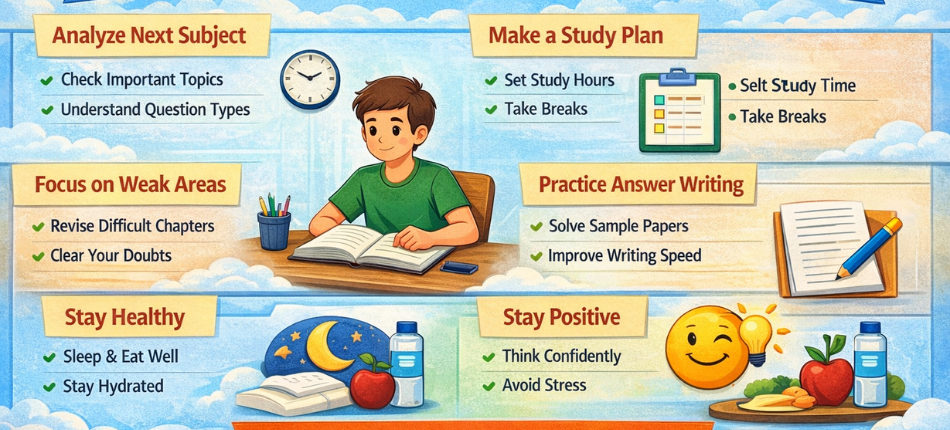
1. Analyze the Next Subject
After completing one exam, take some time to carefully review the syllabus of the upcoming subject. Identify important chapters, high-weightage topics, and areas that require extra attention. Understanding what to prioritize helps you study in a focused and organized manner instead of feeling overwhelmed..
At Vision Academy, we guide students to break the syllabus into small sections. This makes revision easier and more organized.
2. Make a Smart Study Plan
Creating a clear and realistic timetable for the exam gap days is essential. Divide your time between revision, practice papers, and quick recap sessions. A structured study plan keeps you disciplined, reduces last-minute stress, and ensures complete syllabus coverage.
3. Focus on Weak Areas First
Start your preparation with topics you find difficult or confusing. Use this time to clear doubts, revise challenging concepts, and practice related questions. Strengthening weak areas during exam gaps boosts confidence and prevents panic during the actual exam.
4. Practice Writing Answers
Writing practice is crucial for improving speed, clarity, and presentation. Solve previous year question papers or sample papers under timed conditions. This helps you understand the exam pattern, manage time effectively, and improve answer structuring skills.
Vision Academy encourages mock tests during exam gaps to simulate real exam conditions.
5. Avoid Overstudying
Studying continuously without proper breaks can reduce concentration and productivity. Follow a balanced routine with short breaks, proper sleep, and healthy meals. A relaxed and fresh mind performs much better than an exhausted one during exams.
Common Mistakes Students Make During Exam Gaps
- Starting new topics
- Ignoring revision
- Using too much social media
- Sleeping very late
- Not practicing writing
Avoiding these mistakes can improve results significantly.
How Exam Gap Preparation Reduces Stress
Proper planning during exam gap days plays a major role in reducing stress and anxiety. When students organize their time effectively, they avoid last-minute pressure and rushed revision, which often leads to confusion and panic. A clear study plan improves understanding and clarity of important topics, making it easier to recall information during the exam. Consistent revision and practice build confidence, helping students feel more prepared and in control. Planned study sessions also improve memory retention, as concepts are revised calmly and systematically. Effective stress management through smart exam gap preparation ultimately leads to better focus, stronger performance, and greater exam success.
Healthy Habits During Exam Gaps
Maintaining healthy habits during exam gaps is essential for staying focused and productive. Students should eat light and nutritious meals that provide energy without making them feel sluggish. Drinking enough water keeps the body hydrated and improves concentration levels. Getting 6–8 hours of proper sleep helps the brain retain information better and prevents fatigue. Light physical activity such as stretching, walking, or simple exercises can reduce stress and refresh the mind. Additionally, practicing deep breathing or short meditation sessions can improve mental clarity and keep anxiety under control, ensuring better performance in exams.
Conclusion
Exam gap days are powerful revision opportunities. With smart planning, focused revision, and consistent practice, students can improve their performance significantly.
At Vision Academy, we help students learn effective exam strategies, time management skills, and smart revision techniques to achieve academic excellence.
If you want expert guidance for exam preparation, join Vision Academy and study smarter, not harder!
How to Prepare During Exam Gaps How to Prepare During Exam Gaps How to Prepare During Exam Gaps How to Prepare During Exam Gaps How to Prepare During Exam Gaps How to Prepare During Exam Gaps How to Prepare During Exam Gaps How to Prepare During Exam Gaps
Best Coaching Institute in Kalyan
Science Coaching Classes in Kalyan | Vision Academy

 Previous Post
 Next Post