
Exam Stress Management Tips for Students
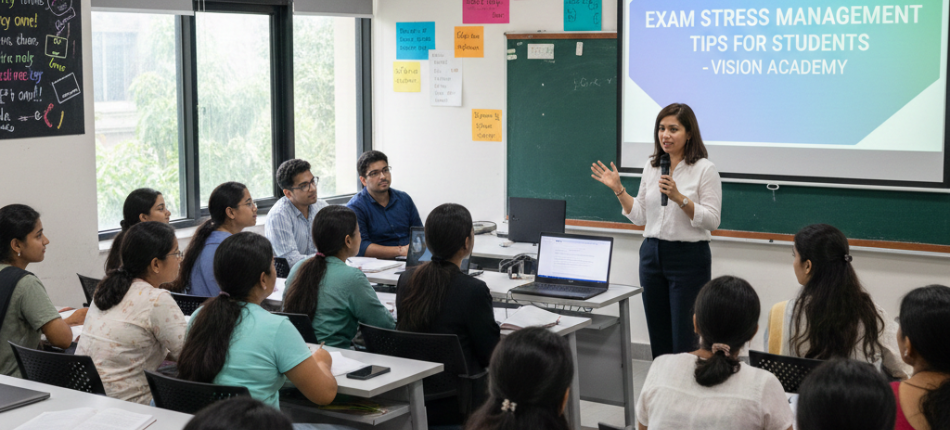
Exam Stress Management Tips for Students – Vision Academy – How to Stay Calm, Focused & Confident
Introduction
Exams play a crucial role in shaping a student’s academic future, but the pressure to perform well often leads to stress and anxiety. Exam stress is common among students of all ages, yet managing it effectively can significantly improve concentration, memory, and overall performance. In this blog, we’ll explore practical and proven exam stress management tips for students to help them stay calm, confident, and well-prepared.
Struggling with exam stress? Explore proven exam stress management tips for students to boost confidence, improve focus, and succeed academically.
What Is Exam Stress?
Exam stress is the feeling of worry, nervousness, or fear related to exams and academic performance. While a little stress can motivate students, excessive stress can negatively impact mental health, sleep patterns, and exam results.
Common Causes of Exam Stress
Understanding the causes of exam stress is the first step toward managing it:
-
Fear of failure
-
Heavy syllabus and time pressure
-
High expectations from parents or teachers
-
Lack of preparation or poor time management
1. Start Preparation Early
Starting exam preparation early is one of the most effective ways to reduce stress and anxiety. When students begin studying well in advance, they get enough time to understand concepts clearly instead of rushing through topics at the last moment. Early preparation allows better planning, regular revision, and improved time management. It also boosts confidence, as students feel more in control of their syllabus and are less likely to panic during exams.
2. Practice with Mock Tests
Practicing with mock tests helps students become familiar with the exam pattern, question types, and time limits. Regular mock tests improve time management skills and highlight strengths as well as areas that need improvement. They also reduce exam fear by creating a real exam-like experience, helping students build confidence and perform better under pressure.
3. Take Short, Effective Breaks
Taking short, effective breaks during study sessions helps refresh the mind and prevent burnout. Studying continuously for long hours can reduce concentration and increase stress. Techniques like the Pomodoro method—25 minutes of focused study followed by a 5-minute break—improve productivity and mental clarity. Short breaks help students stay energized, focused, and stress-free while preparing for exams.
4. Talk About Your Stress
Talking about exam-related stress helps students release emotional pressure and gain support. Sharing concerns with parents, teachers, friends, or mentors can provide reassurance, guidance, and practical solutions. Open communication reduces anxiety, helps students feel understood, and reminds them that they are not alone in facing exam challenges.
5. Avoid Comparisons
Every student has a unique learning pace and set of strengths. Comparing yourself with others can increase stress and lower self-confidence. Instead, focus on your own progress, improvement, and learning goals. Recognizing your strengths and working steadily on weak areas helps build confidence and reduces unnecessary exam pressure.
6. Stay Away from Last-Minute Panic
Last-minute panic can negatively affect memory and concentration. Instead of trying to learn new topics just before the exam, focus on calm revision of what you have already studied. Trust your preparation, stay composed, and maintain a positive mindset. A relaxed and confident approach helps you recall information better and perform well in exams.
7. Use Relaxation Techniques
Relaxation techniques play a vital role in managing exam stress and anxiety. Practices such as deep breathing, meditation, yoga, or light stretching help calm the mind and relax the body. Even a few minutes of mindfulness each day can reduce stress levels, improve focus, and enhance emotional balance, allowing students to approach exams with a clear and confident mindset.
8. Maintain a Healthy Lifestyle
Maintaining a healthy lifestyle is essential for effective exam stress management, as physical health directly impacts mental well-being. Students should aim for 7–8 hours of quality sleep daily to improve memory and concentration. Eating nutritious meals, staying well-hydrated, and avoiding excessive caffeine or junk food help keep energy levels stable. A healthy body supports a calm, focused mind, enabling students to handle exam pressure more effectively.
Conclusion
Managing exam stress is essential for both academic success and mental well-being. By adopting these exam stress management tips for students, you can reduce anxiety, enhance concentration, and approach exams with confidence. Remember, consistent effort and a positive mindset are the keys to success.
Exam Stress Management Tips for Students Exam Stress Management Tips for Students Exam Stress Management Tips for Students Exam Stress Management Tips for Students Exam Stress Management Tips for Students Exam Stress Management Tips for Students Exam Stress Management Tips for Students Exam Stress Management Tips for Students